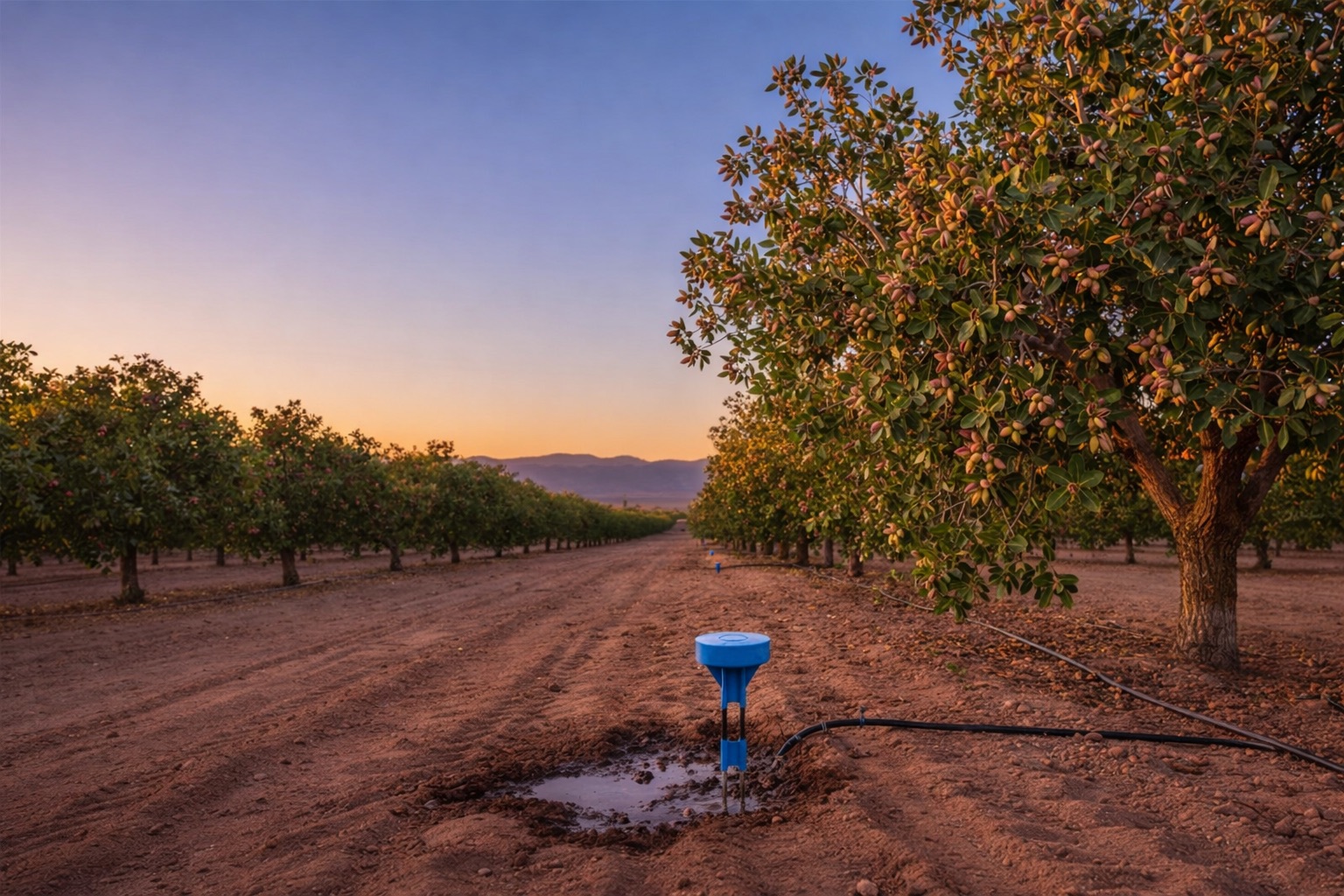
Precision orchard irrigation through soil moisture data

In high-value orchard production across Southwestern United States, efficient soil moisture management is the difference between a record harvest and a lost season. From the almond groves of the Central Valley to the citrus blocks of the Yuma Valley, tree crops require precise water delivery to ensure strong development, optimal fruit quality, and long-term sustainability.

Orchard trees are significant water users, often requiring 40–60 inches of water per season depending on the crop and climate. Incorrect timing or volume can directly reduce yields, suffocate root systems, or increase disease pressure. Sensoterra wireless soil moisture sensors deliver real-time, site-specific data so growers can base irrigation decisions on actual root zone conditions, not guesswork.

According to California Department of Water Resources precision irrigation plays a critical role in achieving sustainable water use across the state.

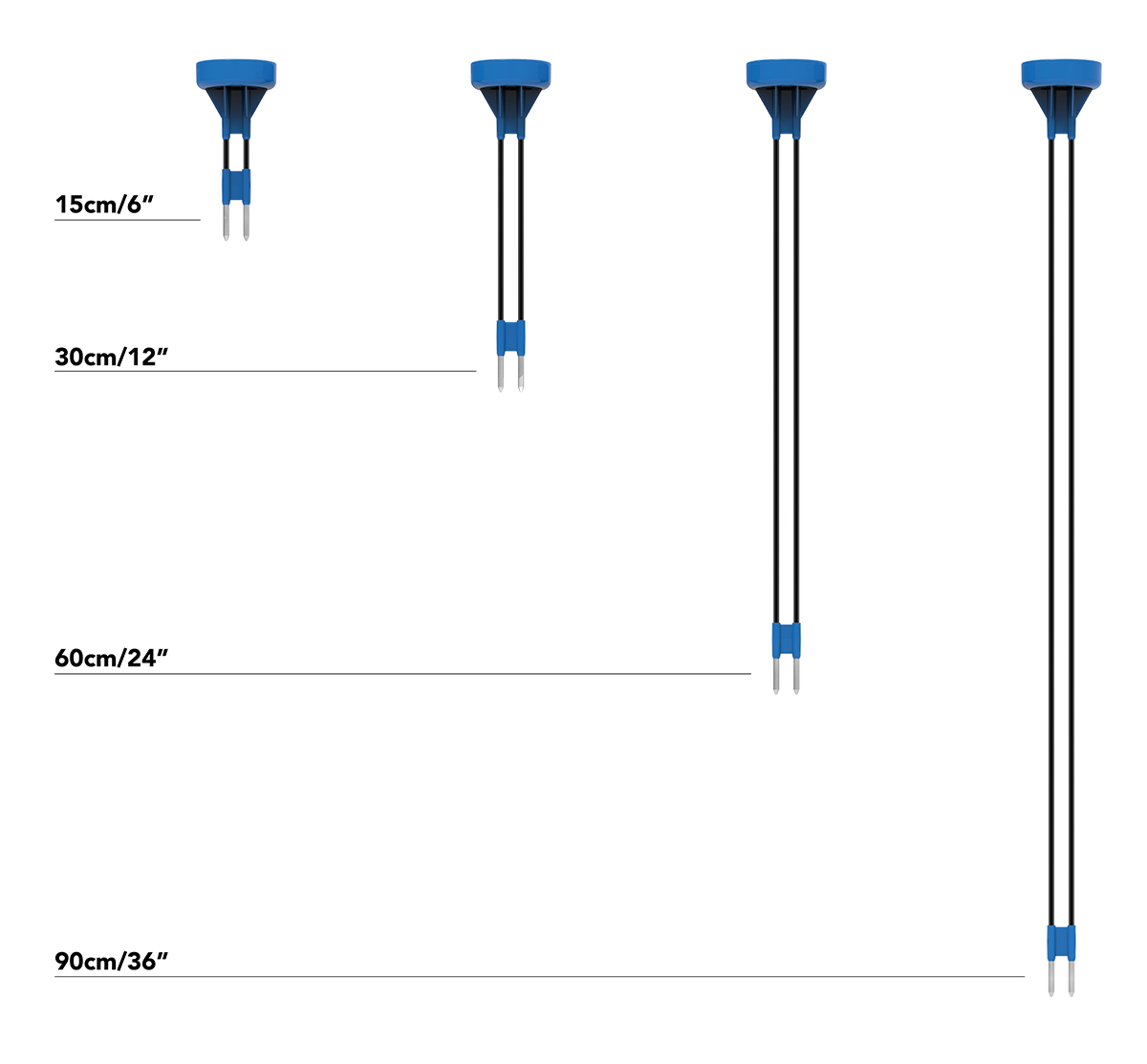
Single depth sensor all lengths

Case study California: Optimizing irrigation for tree health

Fredriks Farms, a 195 acre fruit and nut orchard located in the Ripon and Madera region of the Central Valley in California, introduced Sensoterra sensors to monitor soil health and capillary behavior of their trees

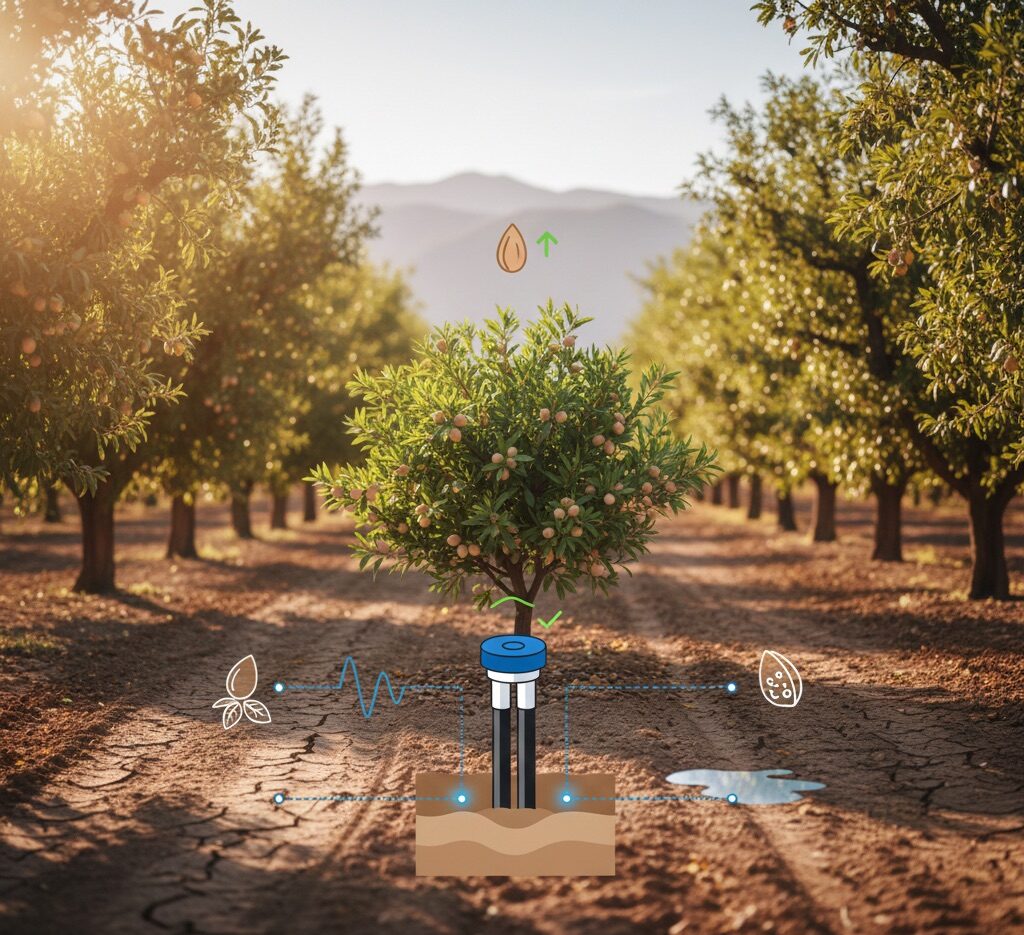
Almond irrigation

Why soil moisture matters in orchard management

Every orchard crop has distinct “critical windows” where water stress can be catastrophic:

  • Nut Crops (Almonds, Walnuts, Pistachios): Moisture levels during hull split and post-harvest bud differentiation determine both current and future crop potential.

  • Citrus (Oranges, Lemons, Grapefruit): Consistent moisture is vital to prevent fruit drop and ensure peel quality, especially during Arizona’s intense heatwaves.

  • Stone Fruit (Peaches, Nectarines, Plums): Precise water management during the final “fruit swell” stage maximizes fruit size and sugar content (Brix).

Continuous data helps you identify exactly when to start irrigation and how to monitor depletion across depths—a proven best practice for higher yields and healthier trees.

100% maintenance free

No wires, no fuss

Highly secure data connection

Suitable for all soil types

The Sensoterra advantage for orchards

  • 100% Maintenance Free: No wires to trip over or cut during mechanical harvesting or pruning.

  • Robust & Easy Installation: “Hammerable” design allows for install in minutes without specialized tools.

  • Sentinel Monitoring: The 36-inch (90cm) sensor acts as a “sentinel” to ensure expensive Nitrogen and water aren’t leaching past the root zone.

  • Temperature Insights: Monitor the “wake-up” period; track soil temps to time your first fertigation exactly when roots become active (typically 55°F/13°C).

  • Long Life: 6–8 years of battery life with hourly measurements, surviving multiple seasons of orchard traffic.

almond soil moisture

Crop-Specific management strategies

Effective irrigation isn’t “one size fits all.” Each orchard variety in California and Arizona has a unique physiological response to water availability.

1. Almonds: The precision nut

Almonds are the cornerstone of California’s Central Valley. Precision moisture data is most critical during the Hull Split phase.

  • The strategy: Use volumetric water content (VWC) sensors to maintain a targeted deficit. This reduces navel orangeworm (NOW) risk and promotes uniform ripening.

  • Sensor placement: Focus on the 18″ to 24″ depth to monitor the primary feeder roots, with a 36″ sensor to catch nitrogen leaching.

2. Citrus (lemons, oranges, & grapefruit)

Thriving in the Yuma Valley (AZ) and Coachella Valley (CA), citrus trees are evergreen and require year-round monitoring.

  • The strategy: Avoid “oscillating stress.” Citrus is prone to fruit drop if moisture levels fluctuate wildly. Sensors help maintain a “steady state” moisture profile.

  • The Arizona heat factor: During 110°F+ days, sensors identify the “refill point” faster than ET models alone, allowing for cooling irrigation pulses that save the crop from heat-induced shrivel.

3. Pistachios: The drought-tolerant powerhouse

Pistachios are increasingly popular in Arizona (Willcox/Bowie) and the San Joaquin Valley because of their salt tolerance and relative hardiness.

  • The strategy: Even though they are drought-hardy, water stress during “shell expansion” and “nut filling” can lead to a high percentage of “blanks” (empty shells).

  • Monitoring tip: Use sensors to ensure the deep soil profile (down to 48″) is recharged during the winter dormant period to provide a buffer for the intense summer heat.

4. Walnuts: Sensitive to “wet feet”

Walnuts are highly susceptible to Phytophthora and other root rot diseases if the soil remains saturated for too long.

  • The strategy: Use real-time data to ensure oxygen returns to the soil between irrigation events. Sensors prevent the “over-watering trap” common in heavier California clay soils.

  • Critical window: Maintain precise moisture during the “spring flush” to ensure leaf development without inducing root stress.

How Sensoterra Enhances Almond Irrigation Decisions

Sensoterra’s soil moisture sensors give almond growers:

  • Accurate, real-time volumetric water content data at multiple depths throughout the root zone.

  • Wireless connectivity for remote monitoring and irrigation planning.

  • Actionable data dashboards and alerts for proactive irrigation scheduling.

  • Scalable deployments that fit orchard blocks of any size — from trial plots to full commercial acreage.

This kind of on-site moisture insight helps make the most of funding programs like SWEEP and EQIP by proving measurable water savings and building stronger irrigation efficiency proposals.

Full article

Irrigation best practices supported by soil moisture data

Successful almond irrigation hinges on monitoring trends, not just surface conditions:

  1. Track moisture depletion at multiple depths to understand real plant-available water.

  2. Leverage ET forecasts with actual soil data for adaptive irrigation scheduling.

  3. Pair precision sensors with drip or micro-irrigation systems for reliable, efficient water delivery.

  4. Document improvements and water savings to strengthen future funding applications.

These practices align with California’s increasing emphasis on measured water use and regulatory compliance.

Advanced orchards management FAQ:

1. How do the sensors transmit data to the dashboard if there is no Wi-Fi in the orchard?
Sensoterra sensors typically use LoRaWAN (Long Range Wide Area Network). This low-power technology allows signals to travel miles to a small gateway connected to the internet, making it ideal for remote almond or citrus blocks for a long period without charging.

2. Can I integrate this soil data into my existing automated irrigation controller?
Yes. While the text mentions a dashboard, the data is usually available via API (Application Programming Interface). This allows the moisture readings to “talk” to smart valves or farm management software to trigger irrigation automatically based on set thresholds.

3. Do the sensors need to be calibrated for different soil textures like heavy clay or sandy loam?
While the sensors are “suitable for all soil types,” maximum accuracy requires selecting the correct soil calibration curve in the app. Because water moves differently in clay than in sand, choosing the right profile ensures the Volumetric Water Content (VWC) percentage is precise.

4. What happens to the sensors during the winter freeze?
The sensors are designed to remain in the ground year-round. However, if the soil freezes solid, the moisture readings will drop significantly because the sensor measures liquid water. The hardware itself is ruggedized to survive sub-zero temperatures without damage.

5. How many sensors do I actually need per acre?
It depends on soil variability. In a uniform 40-acre block, 2–3 “sentinel” stations (with sensors at different depths) might suffice. If the topography changes or soil types shift from sandy to loamy, you should place a station in each unique “irrigation zone.”

6. Is the battery replaceable after the 6–8 year lifespan?
No. To maintain a 100% waterproof, vacuum-sealed housing that survives heavy machinery and irrigation, the units are fully encapsulated. Once the battery is depleted after several years, the sensor unit is replaced.

7. Can these sensors measure soil salinity (EC) as well?
The text focuses on moisture and temperature. While some advanced models in the industry measure Electrical Conductivity (EC), the standard Sensoterra “hammerable” sensors are optimized for VWC and temperature to keep the cost down and the battery life long.

8. How deep should I actually install the sensor for a young tree versus a mature one?
For young trees, sensors should be placed at 6–12 inches where the small root ball is active. For mature orchards, as the text suggests, a “stacked” approach at 18, 24, and 36 inches is better to monitor the full root zone and deep drainage.

9. Does the “hammerable” design damage the internal electronics?
No. The internal components are potted in a high-impact resin. This allows you to use a rubber mallet to drive the sensor directly into undisturbed soil, which is crucial because gaps or “air pockets” around a sensor lead to false dry readings.

10. Can I move the sensors to a different block after the season?
Absolutely. They can be pulled from the ground (using a removal tool) and relocated. This is common in deciduous orchards where a grower might want to move sensors from a harvested block to a late-season variety block.

Get started with Sensoterra

To get started, answer a few short questions so we can send you a custom quote

request a quote