









Maximize Yield, Minimize Water Use with Sensoterra

In almond production, efficient soil moisture management is essential for strong tree development, optimal nut quality, and sustainable water use. Almond trees can require 40–58 inches of water per season, and incorrect irrigation timing or amounts can directly reduce yield, harm root systems, or increase disease risk.

Sensoterra wireless soil moisture sensors deliver real-time, site-specific soil moisture data so growers can base irrigation decisions on actual root zone conditions, not guesswork.


According to California Department of Water Resources precision irrigation plays a critical role in achieving sustainable water use across the state.

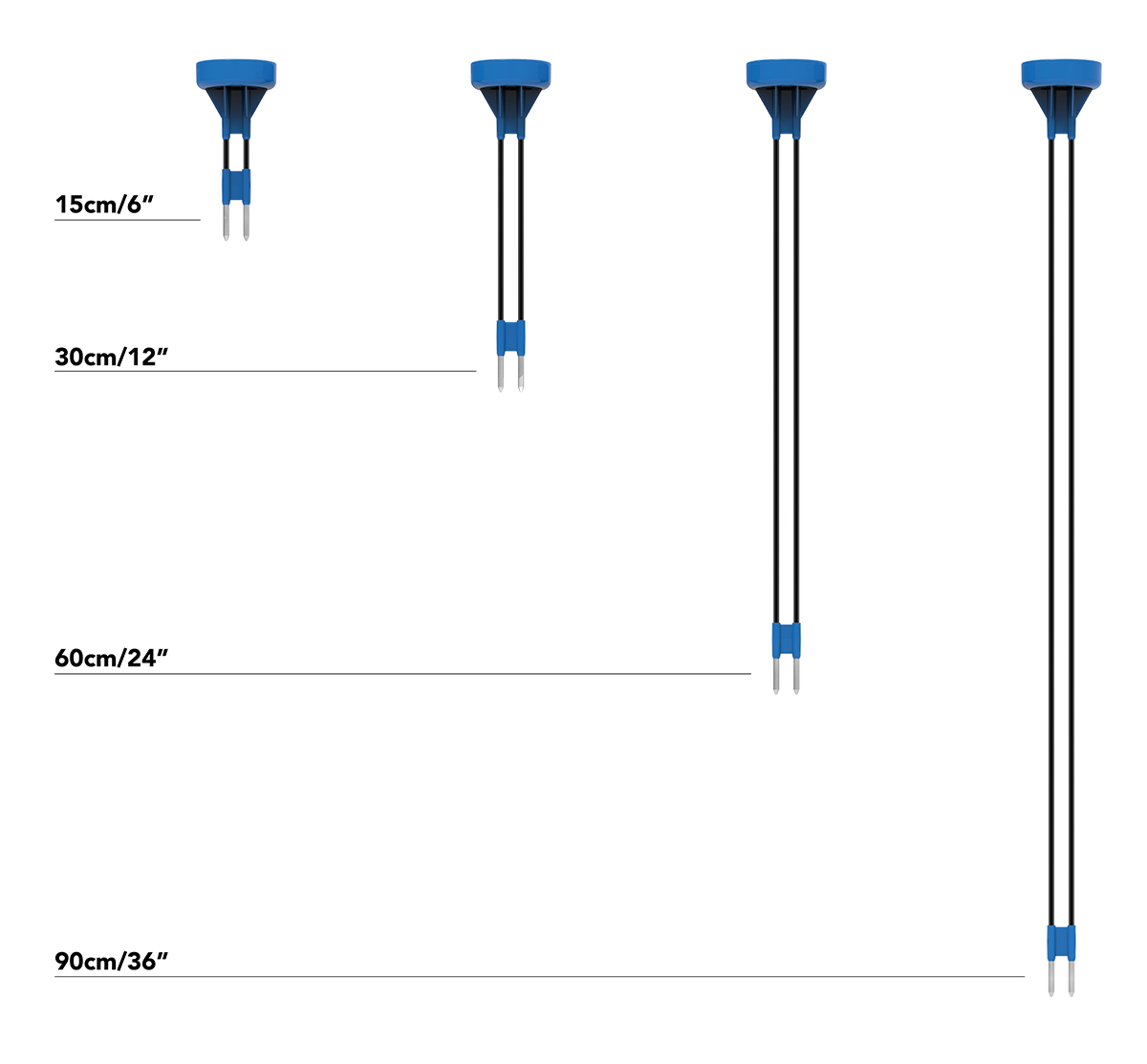
Single depth sensor all lengths

100% maintenance free

No wires, no fuss

Highly secure data connection

Suitable for all soil types

Trusted by California Growers

“There is a huge need to learn how to better irrigate and control the consumption of water”

“As an industry, we need to improve the efficiency of the data collected in the field and to make better irrigation decisions.”

“It’s simple. You can hammer them straight down into the ground.“

MATT MURRAY, PROCESS TECH AG

Case study California: Optimizing irrigation for tree health

Fredriks Farms, a 195 acre fruit and nut orchard located in the Ripon and Madera region of the Central Valley in California, introduced Sensoterra sensors to monitor soil health and capillary behavior of their trees

Almond irrigation
almond soil moisture

Why Soil Moisture Matters in Almond Production

Almond trees have distinct water needs throughout the season. From early vegetative growth to hull development and post-harvest refill, timely irrigation decisions impact nut quality and orchard health. Traditional practices relying on weather estimates or visual cues often miss critical wet/dry cycles in the root zone, leading to over- or under-watering.


In contrast, continuous soil moisture data helps you begin irrigation at the right time and monitor moisture depletion across depths — a proven best practice for higher yields and healthier trees.

Support for Growers: California’s SWEEP & Federal EQIP Funding

To help manage water use and transition to more efficient systems, almond growers in California can access valuable financial support:

SWEEP – State Water Efficiency & Enhancement Program

The California Department of Food and Agriculture’s SWEEP program offers grant funding to improve irrigation efficiency and reduce water waste on farms. Eligible projects include soil moisture monitoring equipment, irrigation system upgrades, and soil moisture-based scheduling tools — all aligned with the state’s drought resilience and emission reduction goals.

While direct application windows can vary by year, region, and block grant partners, growers should monitor openings and reach out to local conservation districts and technical assistance providers for support.

EQIP – Environmental Quality Incentives Program

At the federal level, the U.S. Natural Resources Conservation Service (NRCS) offers EQIP funding opportunities for 2026, aimed at helping producers implement conservation-focused irrigation technologies, improve water use efficiency, and protect natural resources (Natural Resources Conservation Service).
EQIP can often be combined with state programs like SWEEP to stretch investment dollars further into advanced soil moisture tools and irrigation enhancements.

Compatible with types of soil in California

Soil Series Region / Typical Crops Texture / Drainage Key Feature for Soil Moisture Sensing
Almendra (Almendra series) Butte County, on alluvial fans — used for orchards (almonds, walnuts) Fine-loamy (≈ loam surface, ~23-24% clay) Well-drained, deep soils — sensors can track moisture across full root zone; low hardpan risk
San Joaquin (San Joaquin series) Central Valley (Fresno, Madera, Merced) — crops include almonds, grapes, oranges Loam to clay subsoil, with underlying duripan (cemented layer) Hardpan can restrict root depth and water percolation — good argument for sensors to identify where moisture builds up or stagnates
Vineyard (Vineyard series) Vineyard lands in California — viticulture soils in lacustrine sediments Very deep, somewhat poorly drained — mixed sediments Moisture retention may be high but drainage slower – sensors help avoid over-watering and root stress
Additional areas (citrus/vegetable areas) Lighter soils for almonds per CDFA Sandy-loam to loam Fast drainage = sensors help avoid under-moisture and over-irrigation

How Sensoterra Enhances Almond Irrigation Decisions

Sensoterra’s soil moisture sensors give almond growers:

  • Accurate, real-time volumetric water content data at multiple depths throughout the root zone.

  • Wireless connectivity for remote monitoring and irrigation planning.

  • Actionable data dashboards and alerts for proactive irrigation scheduling.

  • Scalable deployments that fit orchard blocks of any size — from trial plots to full commercial acreage.

This kind of on-site moisture insight helps make the most of funding programs like SWEEP and EQIP by proving measurable water savings and building stronger irrigation efficiency proposals.

Full article

Irrigation Best Practices Supported by Soil Moisture Data

Successful almond irrigation hinges on monitoring trends, not just surface conditions:

  1. Track moisture depletion at multiple depths to understand real plant-available water.

  2. Leverage ET forecasts with actual soil data for adaptive irrigation scheduling.

  3. Pair precision sensors with drip or micro-irrigation systems for reliable, efficient water delivery.

  4. Document improvements and water savings to strengthen future funding applications.

These practices align with California’s increasing emphasis on measured water use and regulatory compliance.

Start Optimizing Almond Irrigation Today

Cut costs, improve orchard health, and build resilience against drought and regulation shifts. Request a quote for Sensoterra soil moisture sensors and see how precise moisture intelligence can transform your irrigation strategy.

  • Hourly measurements, 6-8 years battery life
  • Completely wireless (including datalogger)
  • Robust and easy to install without additional tools (hammerable)
  • Minimal soil disturbance
  • 100% maintenance free
  • Easy access to data – API-first
  • Compatible with all soil types (>45 standard calibrations)
  • High security data connections and database
Single depth sensor all lengths

Advanced Almond Management FAQ:

1. How does VWC monitoring specifically assist in Regulated Deficit Irrigation (RDI) during the critical hull split stage?

During hull split, growers intentionally induce mild water stress to promote uniform ripening and reduce Navel Orangeworm (NOW) infestations. VWC sensors allow growers to precisely navigate this “stress window” by ensuring moisture levels stay within the targeted deficit range without crossing into severe stress that could cause premature leaf drop or “stick-tights.”

2. Almonds are highly sensitive to salinity and Boron; how can sensors help manage the “leaching fraction” in these orchards?

By using the Dynamic EC feature alongside multi-depth VWC data, growers can determine exactly when salts have accumulated in the root zone. This allows for a targeted “leaching event” where just enough water is applied to push salts below the 36-inch root zone, preventing toxic salt buildup while minimizing water waste.

3. Mature almond trees can have roots extending beyond 4 feet; why is monitoring at the 36-inch (90cm) depth crucial for these orchards?

While the majority of active “feeder” roots are in the top 2 feet, the 36-inch sensor acts as a “sentinel” for deep percolation. If VWC increases at this depth during standard irrigation, it indicates that water (and expensive Nitrogen) is moving past the primary root mass and being lost to the subsoil.

4. How should a grower correlate VWC sensor data with manual Stem Water Potential (SWP) “Pressure Bomb” readings?

VWC provides continuous data on *how much* water is in the soil, while SWP measures the *tree’s response*. By “pairing” these readings for one season, a grower can establish a VWC stress threshold. Once this baseline is set, the grower can rely on the real-time sensors to know when the tree is reaching its stress limit without needing to manually pump pressure bombs daily.

5. Why is moisture monitoring during the post-harvest period often considered as important as the pre-harvest period for almonds?

Post-harvest is when bud differentiation occurs for the following year’s crop. Severe moisture stress during this period can drastically reduce the number and quality of flowers in the next spring. VWC sensors ensure the orchard recovers from the harvest-induced “dry down” quickly enough to support next year’s yield potential.

6. Almonds are heavy users of Nitrogen; how does soil moisture precision impact the nitrogen use efficiency (NUE)?

Nitrogen is highly mobile in water. Precision monitoring ensures that fertigation events only saturate the soil to Field Capacity within the root zone. This keeps the nitrogen “locked” in the upper soil layers where the tree can absorb it, preventing it from leaching into the groundwater and ensuring compliance with California’s Irrigated Lands Regulatory Program (ILRP).

7. Can soil moisture sensors play a role in almond frost protection strategies during early spring bloom?

Yes. Moist soil absorbs more solar radiation during the day and releases more heat at night than dry soil. Growers use VWC data to ensure the orchard floor is at Field Capacity leading up to a frost event, which can keep the orchard 1–2 degrees warmer—often the difference between a successful crop and a total loss.

8. Most almond orchards use micro-sprinklers; how does this affect where a Sensoterra sensor should be installed compared to a drip-irrigated field?

In micro-sprinkler systems, the sensor should be placed mid-way between the sprinkler head and the tree trunk. This area represents the “average” moisture of the wetted pattern. Placing it too close to the head will result in false “over-wet” readings, while placing it at the edge of the throw will show “dry” readings that don’t reflect the main root zone.

9. How do different almond rootstocks (e.g., Nemaguard vs. Hansen 536) influence the VWC thresholds a grower should set?

Peach-Almond hybrids like Hansen 536 are often more vigorous and can have higher water demands than standard Nemaguard rootstocks. Growers must set their VWC “refill points” slightly higher for these high-vigor rootstocks to prevent the rapid depletion of available water that can occur during a Central Valley heatwave.

10. Sensoterra sensors measure soil temperature; how is this data used during the “wake up” period in February/March?

Root activity in almonds generally begins when soil temperatures reach approximately 55°F (13°C). Monitoring soil temperature allows growers to time their first “irrigation/fertigation” of the season perfectly—ensuring that nutrients are applied only when the roots are actually active and able to take them up.

Get started with Sensoterra

To get started, answer a few short questions so we can send you a custom quote

request a quote