Precision berry irrigation in the Southwest desert

In the high-stakes berry industry of Southern California and Arizona, soil moisture management is the difference between premium market pricing and a total crop loss. From the coastal strawberry fields of Oxnard to the heat-resilient blackberry brambles of the Arizona low desert, berries require precise, consistent hydration to ensure fruit size, flavor (Brix), and plant longevity.

Berries are notoriously sensitive. Over-watering suffocates delicate root systems and leaches expensive nutrients, while under-watering in the 100°F+ Southwest heat leads to immediate fruit shrivel and flower drop. Sensoterra wireless soil moisture sensors provide the real-time, root-zone data required to navigate the Southwest’s extreme evaporative demand with confidence.

According to California Department of Water Resources precision irrigation plays a critical role in achieving sustainable water use across the state.

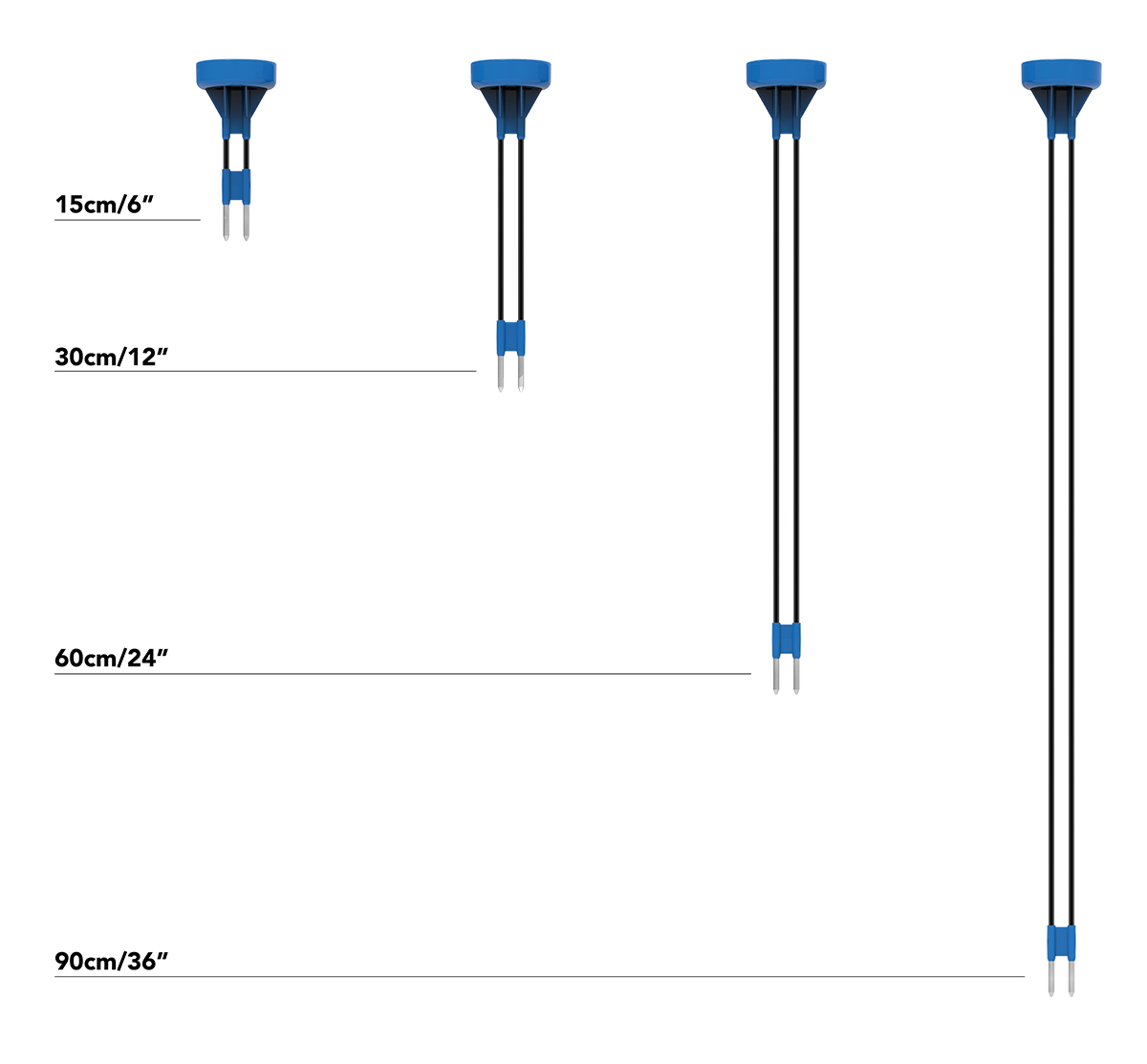
Single depth sensor all lengths

Automated drip: Viticulture

Precision irrigation for wine production. Optimized irrigation management for improved grape quality and production.

Vineyard irrigation

Why soil moisture matters for berries

Critical windows for berry quality

Every berry variety has a unique “tipping point” where water stress becomes permanent damage.

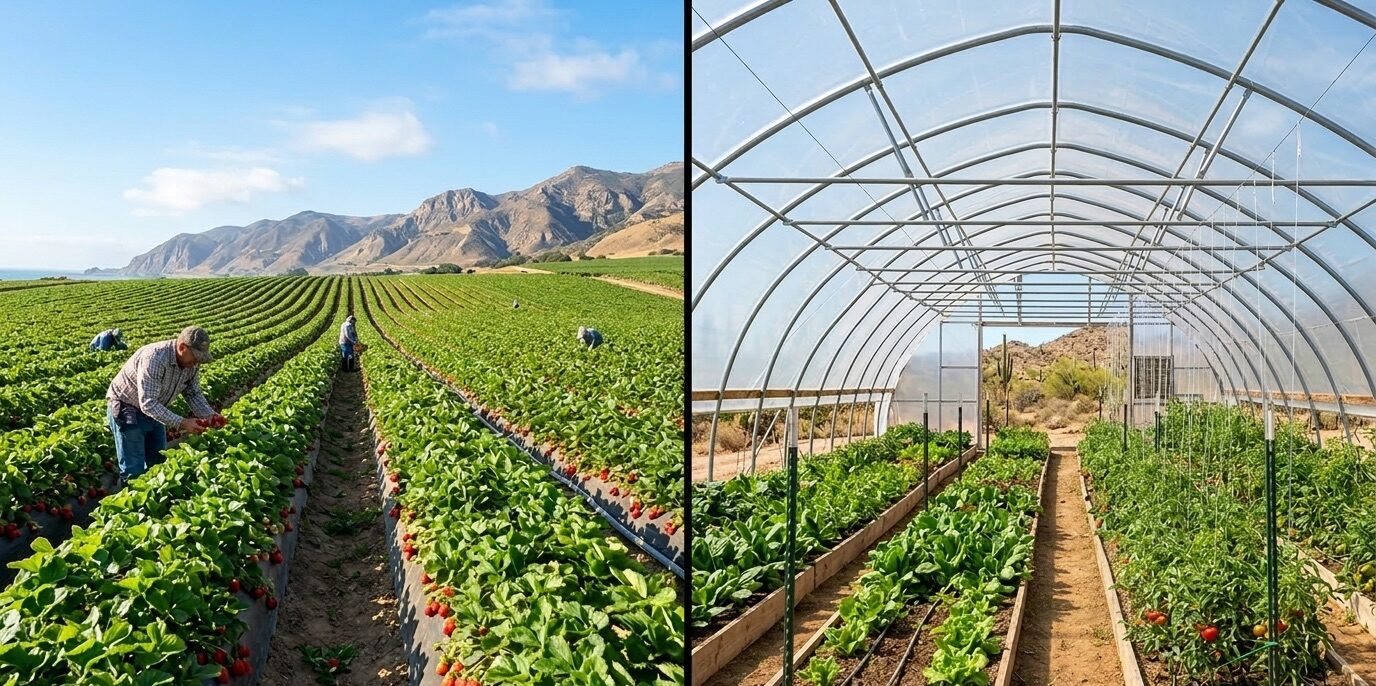
  • Strawberries (The Coastal King): Consistent moisture is vital to prevent salt buildup in the root zone—a common issue in Southern California—and to maintain the fruit size required for “grade A” shipping.

  • Blackberries & Raspberries (The Brambles): Precise moisture control during the “fruit swell” stage ensures juicy, firm berries. In Arizona, sensors identify the exact “refill point” during afternoon heat spikes to prevent sunscald.

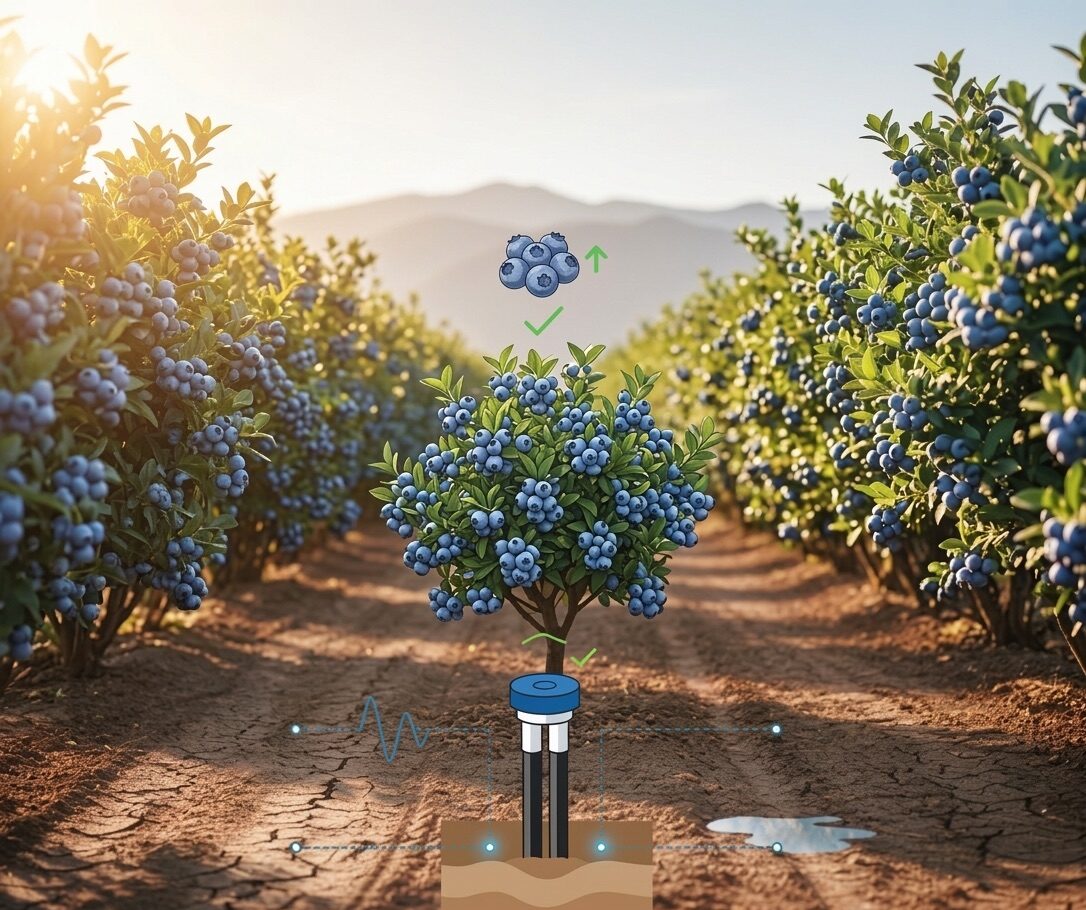
  • Blueberries (The Acid-Lovers): Because most Southwest blueberries are grown in pots or acidic mounds, moisture levels can fluctuate wildly. Real-time data ensures the substrate never reaches the “wilting point.”

100% maintenance free

No wires, no fuss

Highly secure data connection

Suitable for all soil types

The Sensoterra advantage for berry growers

  • 100% Maintenance Free: No wires to snag during hand-picking or interfere with plastic mulching and hoop house structures.

  • Hammerable & Instant: Install in minutes directly through weed fabric or plastic mulch without tearing large holes.

  • High-Frequency Monitoring: Hourly pings track the “fast-dry” cycles common in the sandy soils of the Southwest.

  • Salinity Awareness: Use moisture trends to time “leaching fractions,” ensuring salts are pushed below the root zone without wasting water.

  • Long-Range LoRaWAN: Perfect for large-scale operations in rural Ventura County or the remote fields of Yuma.

Crop-Specific Management Strategies

1. Strawberries: Managing the salt barrier

In Southern California, irrigation is as much about salt management as hydration. Sensoterra sensors help you maintain a steady “VWC” (Volumetric Water Content) to keep salts mobile and away from sensitive feeder roots.

2. Blueberries: Substrate precision

Blueberries in the Southwest are often grown in peat-based substrates. These dry out much faster than native soil. Sensors placed at 6” and 12” depths provide a “safety net,” alerting you the moment the container reaches critical depletion.

3. Desert Blackberries: Beating the heat

In Arizona, the “Transpiration Stress” at 2 PM can be lethal. Use sensors to trigger short “cooling pulses” of irrigation that lower soil temperature and keep the plant’s vascular system open during peak heat.

How Sensoterra Enhances Almond Irrigation Decisions

Sensoterra’s soil moisture sensors give almond growers:

  • Accurate, real-time volumetric water content data at multiple depths throughout the root zone.

  • Wireless connectivity for remote monitoring and irrigation planning.

  • Actionable data dashboards and alerts for proactive irrigation scheduling.

  • Scalable deployments that fit orchard blocks of any size — from trial plots to full commercial acreage.

This kind of on-site moisture insight helps make the most of funding programs like SWEEP and EQIP by proving measurable water savings and building stronger irrigation efficiency proposals.

Full article

Berry irrigation best practices supported by soil moisture data

Successful berry irrigation hinges on maintaining a precise moisture “sweet spot”—balancing the high oxygen needs of the roots with the intense evaporative demand of the Southwest.

  • Monitor the “Active Root Zone” at Multiple Depths: Berries have notoriously shallow root systems. Use sensors at 6″ and 12″ to track immediate water uptake, and a 24″ sensor to ensure expensive nutrients aren’t being washed past the roots into the groundwater.

  • Integrate Real-Time Soil Data with ET Models: Don’t rely on weather forecasts alone. Use actual soil moisture trends to “fine-tune” your Evapotranspiration (ET) calculations, allowing for shorter, more frequent irrigation pulses that keep berries hydrated during peak desert heat.

  • Optimize Drip and Micro-Sprinkler Cycles: Pair precision sensors with your drip lines to maintain a consistent “wetted bulb” around the plant. This prevents the “stress-and-recovery” cycle that causes fruit cracking and bitter flavors.

  • Quantify Water Savings for SWEEP and EQIP Funding: Use historical soil moisture data to document your efficiency. Hard data on reduced water waste significantly strengthens applications for California’s SWEEP (State Water Efficiency and Enhancement Program) and federal EQIP grants.

These practices are essential for navigating the Southwest’s strict regulatory landscape while ensuring your fruit meets the high brix and size standards of the premium berry market.

Precision berry irrigation FAQ:

1. How do the sensors transmit data from remote berry fields or hoop houses?
Sensoterra sensors utilize LoRaWAN (Long Range Wide Area Network). This low-power technology is perfect for berries because the signal can penetrate plastic tunnels and travel miles from remote fields to a single gateway. This ensures you get real-time data from the field to your phone without needing Wi-Fi in the patch.

2. Can I integrate this soil data into my automated drip or fertigation system?
Yes. Through our API, your moisture data can be integrated directly into smart irrigation controllers. This allows you to automate “pulse irrigation” a common berry practice-triggering short bursts of water and nutrients automatically when the root zone hits a specific threshold.

3. Do berries need specific soil calibrations (e.g., for peat or sandy coastal soil)?
Absolutely. Because berries are often grown in highly specific environments like the sandy loams of Oxnard or acidic peat-based substrates selecting the correct soil calibration curve in the app is vital. This ensures your Volumetric Water Content (VWC) readings are hyper-accurate for the medium your berries are actually sitting in.

4. What happens to the sensors during a desert freeze or mountain frost?
The hardware is ruggedized and fully encapsulated to survive sub-zero temperatures. While the sensors will continue to function, note that if the ground (or container) freezes solid, the readings will drop because the sensor measures liquid water. They are built to stay in the field through every frost event.

5. How many sensors do I need for a high-density berry operation?
Berry fields often have high soil variability. We recommend placing sensors in each unique “irrigation zone.” Because berries are so sensitive to slight moisture changes, having a “sentinel” station at the beginning and end of a drip line helps ensure uniform hydration across the entire block.

6. Is the battery replaceable after the 6–8 year lifespan?
No. To maintain a 100% waterproof, vacuum-sealed housing that survives heavy machinery and irrigation, the units are fully encapsulated. Once the battery is depleted after several years, the sensor unit is replaced.

7. Can these sensors measure the salinity (EC) of my berry beds?
These specific sensors are optimized for VWC (Moisture) and Temperature. While they don’t measure Electrical Conductivity (EC) directly, they are essential for managing it; by tracking moisture levels, you can perfectly time your “leaching fractions” to wash salts away from sensitive berry roots.

8. How deep should I install sensors for shallow-rooted berries?
FBerries have much shallower roots than orchard trees. For strawberries and blueberries, we recommend a “shallow stack” at 6 and 12 inches. This allows you to monitor the active “feeder” roots where water uptake happens, while the 12-inch sensor ensures you aren’t over-watering and wasting expensive fertilizer.

9. Will the “hammerable” design tear my weed fabric or plastic mulch?
The slim, “hammerable” design is actually an advantage for berries. You can drive the sensor directly through a tiny slit in your plastic mulch or weed fabric using a rubber mallet. This creates a tight seal with the soil and avoids the large air pockets that lead to the false “dry” readings common with traditional probes.

10. Can I move the sensors if I rotate my berry crops each season?
Absolutely. Berries are often rotated or replanted annually. You can easily pull the sensors from the ground (using a removal tool) and move them to your new beds or different tunnels. This flexibility makes them a cost-effective, multi-season tool for mobile berry operations.

Get started with Sensoterra

To get started, answer a few short questions so we can send you a custom quote

request a quote