
Sensoterra Agri · Use case
Precision Agriculture & Irrigation Control
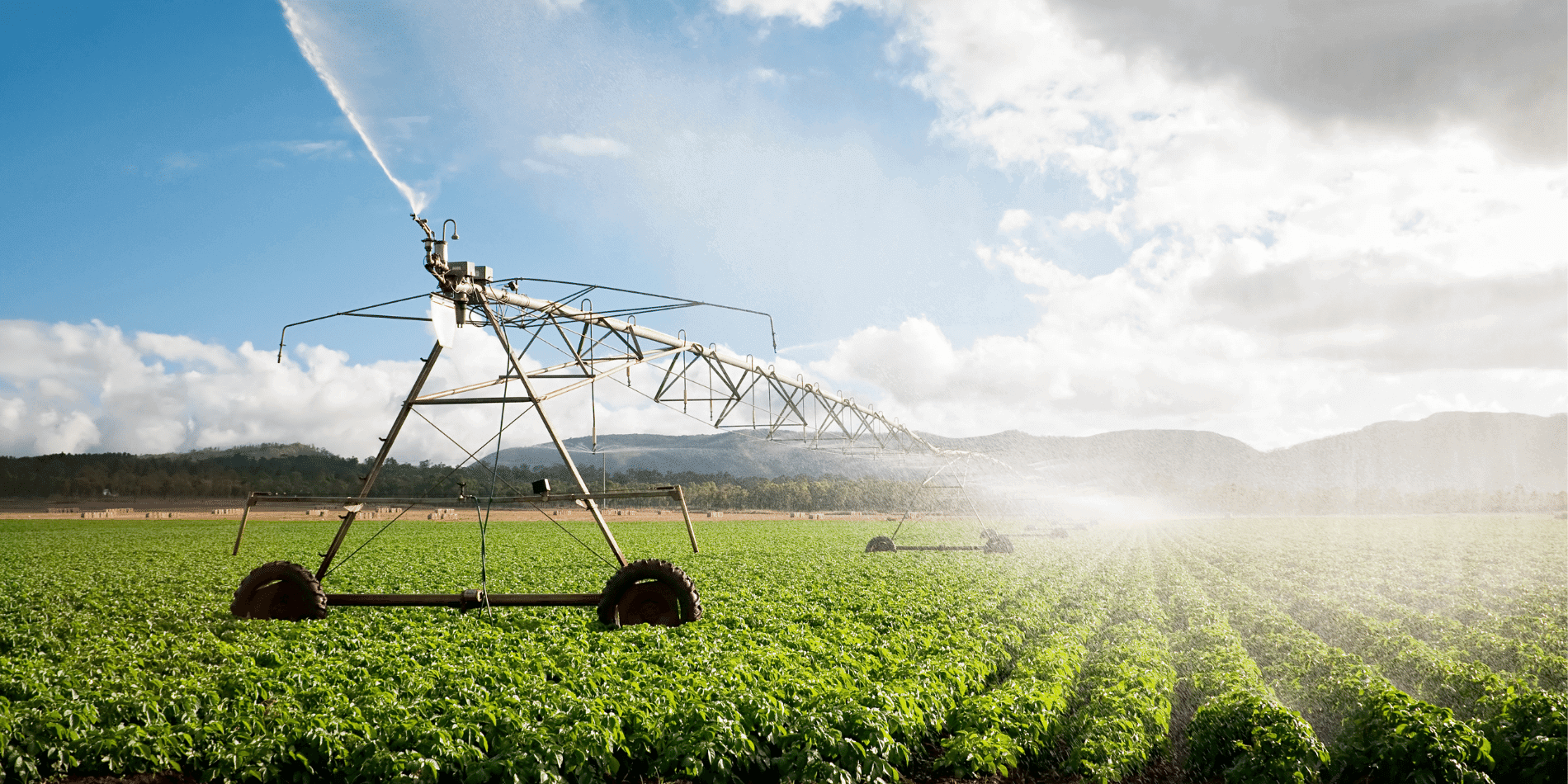
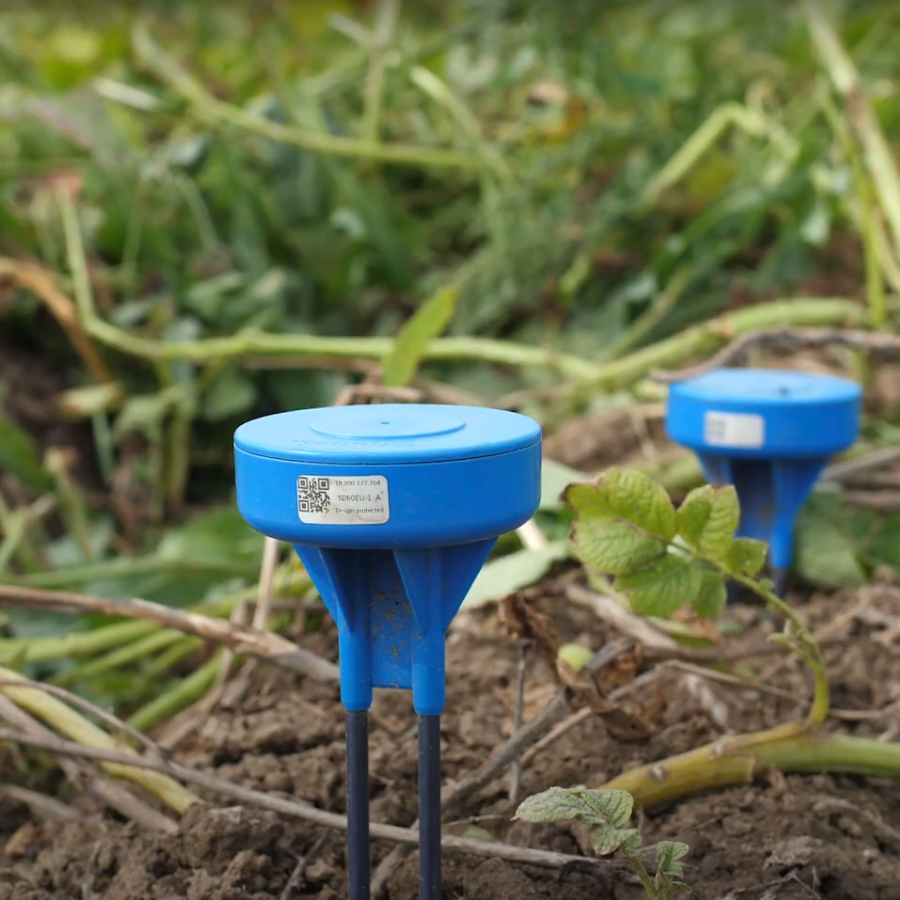
Precision agriculture means giving each part of a field the water it needs, based on measurements instead of a fixed schedule. Sensoterra's wireless soil moisture sensors measure the water in the root zone every hour at 15, 30, 60 or 90 cm (6, 12, 24 or 36 inches), automatically calibrated to your soil. You decide when and how much to irrigate, by hand or through your irrigation controller.
That matters more every season: buyers push for lower prices and higher quality, governments look closer at water use, and fuel, energy, inputs and labor keep getting more expensive.
No maintenance in the field
Hammer it in and leave it. The battery lasts 5–8 years.
No wires, no fuss
Fully wireless, including the datalogger.
Secure data connection
Readings travel to the cloud over an encrypted connection.
Auto-calibrated to your soil
No manual calibration. AI Calibration picks the matching curve for your soil type, or builds a custom one for your field.
The precision agriculture cycle
How does precision agriculture answer the pressure on growers?
By closing the loop between data, insight and action. Measurements become a picture of your field, and that picture shows where and when to irrigate. The result is better yield at lower cost.
Hover, tap or focus any part of the diagram below to see what it means for your operation.
The precision agriculture cycle
Hover, tap or focus any part of the diagram to see what it means.
Why it matters
How much freshwater does agriculture use?
About 70% of all freshwater withdrawn worldwide goes to agriculture, according to the FAO. A large part of the room to save water lies in how and when growers irrigate.
70%
of global freshwater withdrawals goes to agriculture.
Source: FAO AQUASTAT
40%
of that water can be lost to over-irrigation or leaks.
Plant-available water
How do soil moisture sensors prevent over- and under-irrigation?
They show how much plant-available water is left in the root zone. You irrigate before the crop runs short, and stop before water drains past the roots.
Both mistakes cost money. Under-irrigation in a drought can make soil water-repellent, so it takes up water poorly afterwards. Over-irrigation gets less attention, but it wastes water and energy, washes nutrients and pesticides out of the root zone, raises input costs and can pollute freshwater.
Sensoterra sensors track infiltration and soil moisture in the root zone every hour, at one depth with the Single Depth sensor (15, 30, 60 or 90 cm, or 6, 12, 24 or 36 inches) or at six depths from 10 to 90 cm (4 to 36 inches) with the Multi Depth sensor. You can act on the data yourself in the Soil Intelligence Model, or send it to your irrigation controller through our API and irrigation integrations.
And once the data is there, Sensoterra Assist makes it actionable. You talk with your data in plain language and get back the one thing you need before you open a valve: which field, when and how much.
Soil Intelligence Model
One sensor is a point.
Sensor plus model is a field.
Every soil moisture sensor in the world measures a teaspoon of soil; ours measures 6.2 cm³. The Soil Intelligence Model fills in the space between your measuring points, so you read plant-available water across the whole field instead of at a handful of spots.
Your own sensorshourly, root zone
Soil survey datasoil calibration
Weather and soil water balancerain in, evaporation out
Your irrigation log and field observationsyour correction
One estimate per spotthe model weighs these sources against each other and gives every place in the field a moisture value, its own thresholds and a reliability score
- Combines your own sensor with nearby sensors, other depths, the soil water balance and the weather, so no single reading has to carry the whole picture.
- AI Calibration matches each sensor to your soil type, with no manual calibration.
- Thresholds per spot: wilting point, irrigation point, field capacity and saturation. Set a root zone and you get one number for it.
- Shows where it is sure (solid colour) and where it is not (faded), so you know how far to lean on each estimate.
- Sensoterra Assist turns that picture into an irrigation call: which field, when and how much.
Rather work in your own model or platform? The Soil Intelligence API delivers the same calibrated readings and field-level estimates straight into your own system.
In practice
How growers apply it in precision agriculture
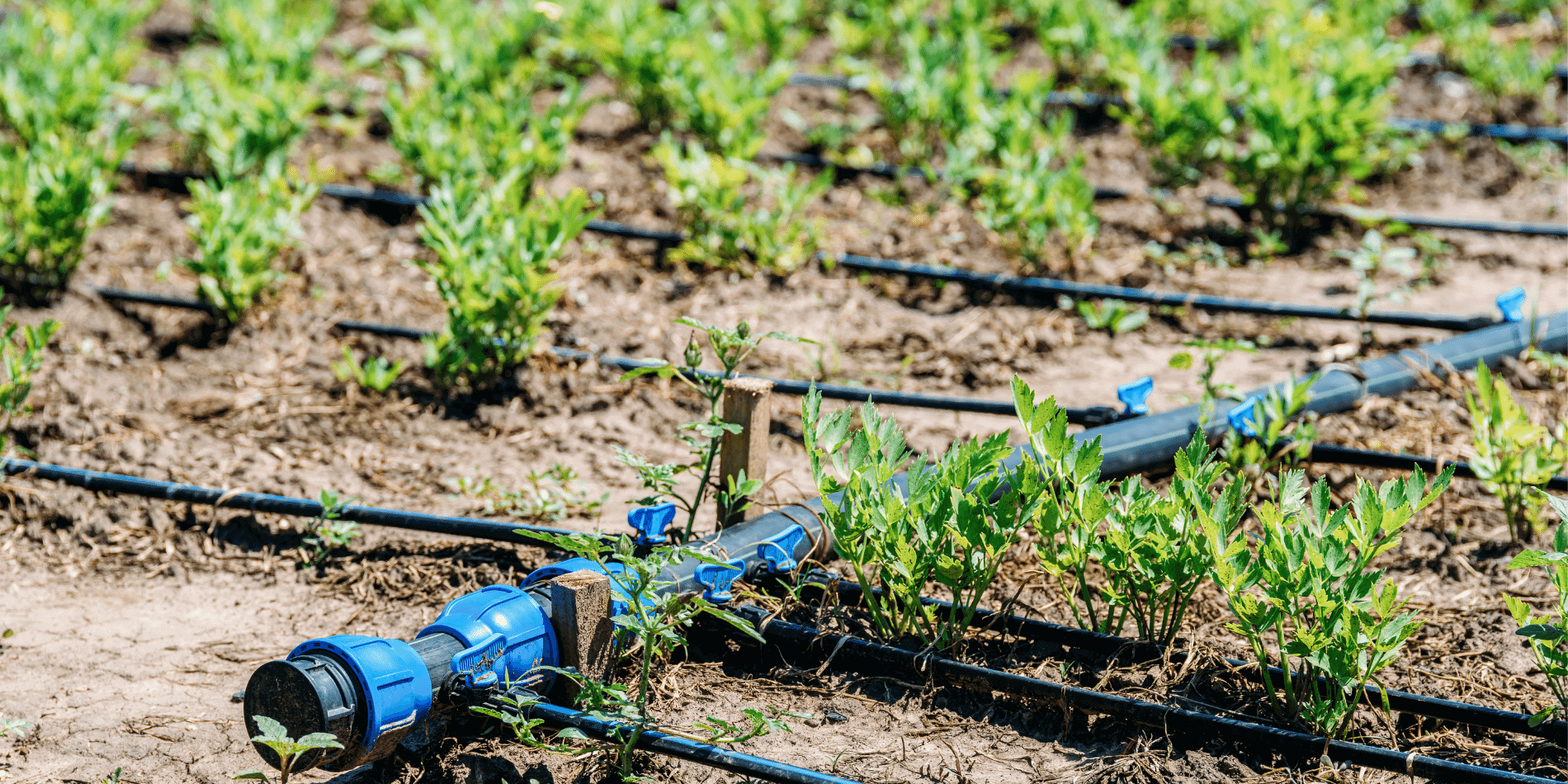
The same principle works across very different systems. Under a pivot in potatoes it shows how far each round actually wets the profile, so rounds can be shortened without risking the crop. In subsurface drip, such as hops in Canada and date palms in the Middle East, it is the only way to see what water does below the surface, where you cannot judge it by eye. In a greenhouse it keeps irrigation steady through a heat wave; in viticulture it steers controlled stress per block for grape quality; and in high-value crops like soft fruit it protects the margin per hectare, where one wrong week costs more than the sensors do. Pick the one closest to your own situation.




Pivot irrigation: Potatoes
Optimized pivot rounds with soil moisture data
Reduced water and energy consumption with optimized pivot rounds for potato fields
Pivot irrigation
Pivot irregation Subsurface Drip Irrigation: Hops
Increased yield during drought conditions
Canadian hop grower increase yield and ensured crop quality during drought conditions
Hops
Hops Drip Irrigation: Greenhouse
Precision irrigation in controlled environment
A Dutch greenhouse grower saved their crop, and improved yield, during extreme drought
Greenhouse tomatoes
Greenhouse tomatoes Subsurface drip: Date Palms
Precision irrigation for date palms in the Middle East
Scalable data & real-time insights with fully integrated smart IoT systems
Mid East Date Palm
Mid East Date Palm Automated drip: Viticulture
Precision irrigation for wine production
Optimized irrigation management for improved grape quality and production
Viticulture
Viticulture High Value Crops
Manage irrigation for growth & profit
Our data-driven approach helps you manage water precisely, reduce waste, and support crop health
High Value Crops
High Value Crops Get started with Sensoterra
To get started, answer a few short questions so we can send you a custom quote

