Irrigation partners can expand services with Sensoterra’s easy, maintenance-free soil moisture sensors. Scalable resale model, real-time data, and reliable connectivity.
Why irrigation specialists should team up
Irrigation contractors and consultants are under pressure to deliver better results with fewer site visits, more automation, and more dependable monitoring tools. But many soil moisture systems are expensive, complicated, and difficult to maintain, making them hard to recommend to growers and even harder to support in the field.
Sensoterra offers a different approach: a simple, maintenance-free sensor designed for long-term stability, fast installation, and seamless connectivity. For irrigation partners, the combination of ease and reliability creates a strong resale opportunity and a better customer experience.
Simple, fast, low-maintenance installation
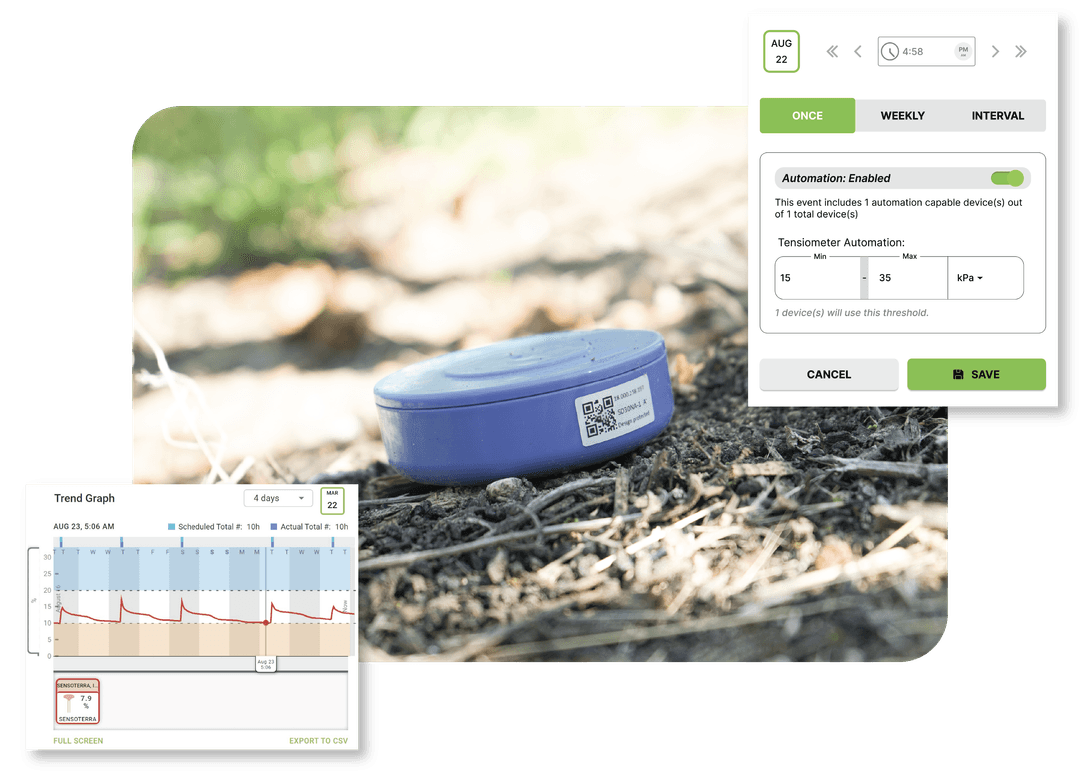
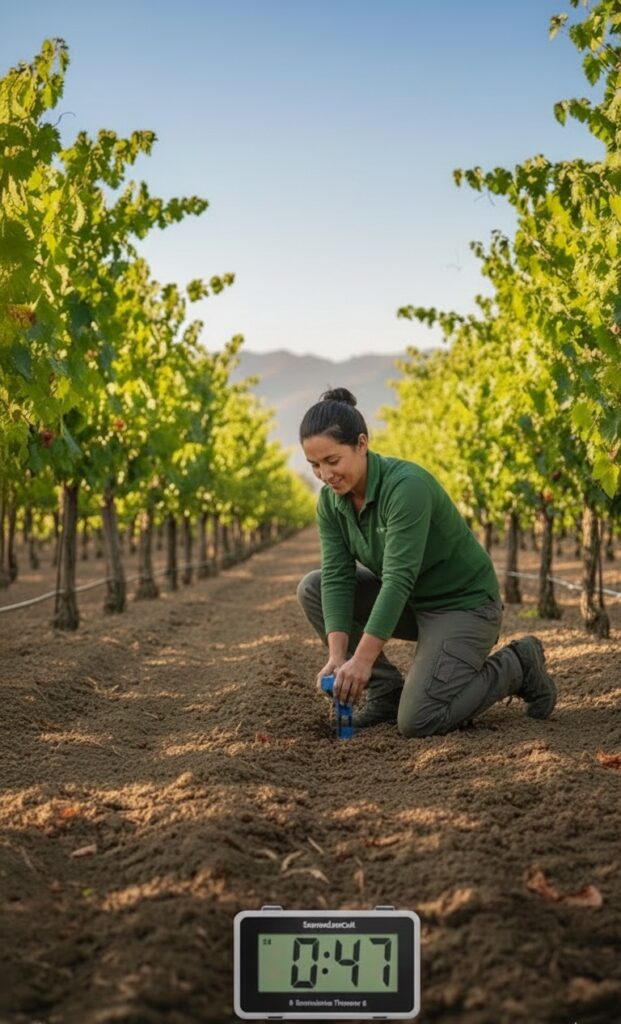
Sensors install in under a minute and require no maintenance during their 5–8 year lifetime. That means:
- Fewer service calls
- Lower total cost of ownership
- Faster installation time per client
- Easier scaling across multiple farms
For partners, this simplicity translates directly into repeatable, profitable projects.
Real-time data that powers better irrigation
Partners increasingly rely on moisture data to guide growers. Sensoterra delivers:
- Soil-type calibrated VWC readings (99.5% accuracy)
- Interpreted soil moisture recommended thresholds for plant available water (PAW)
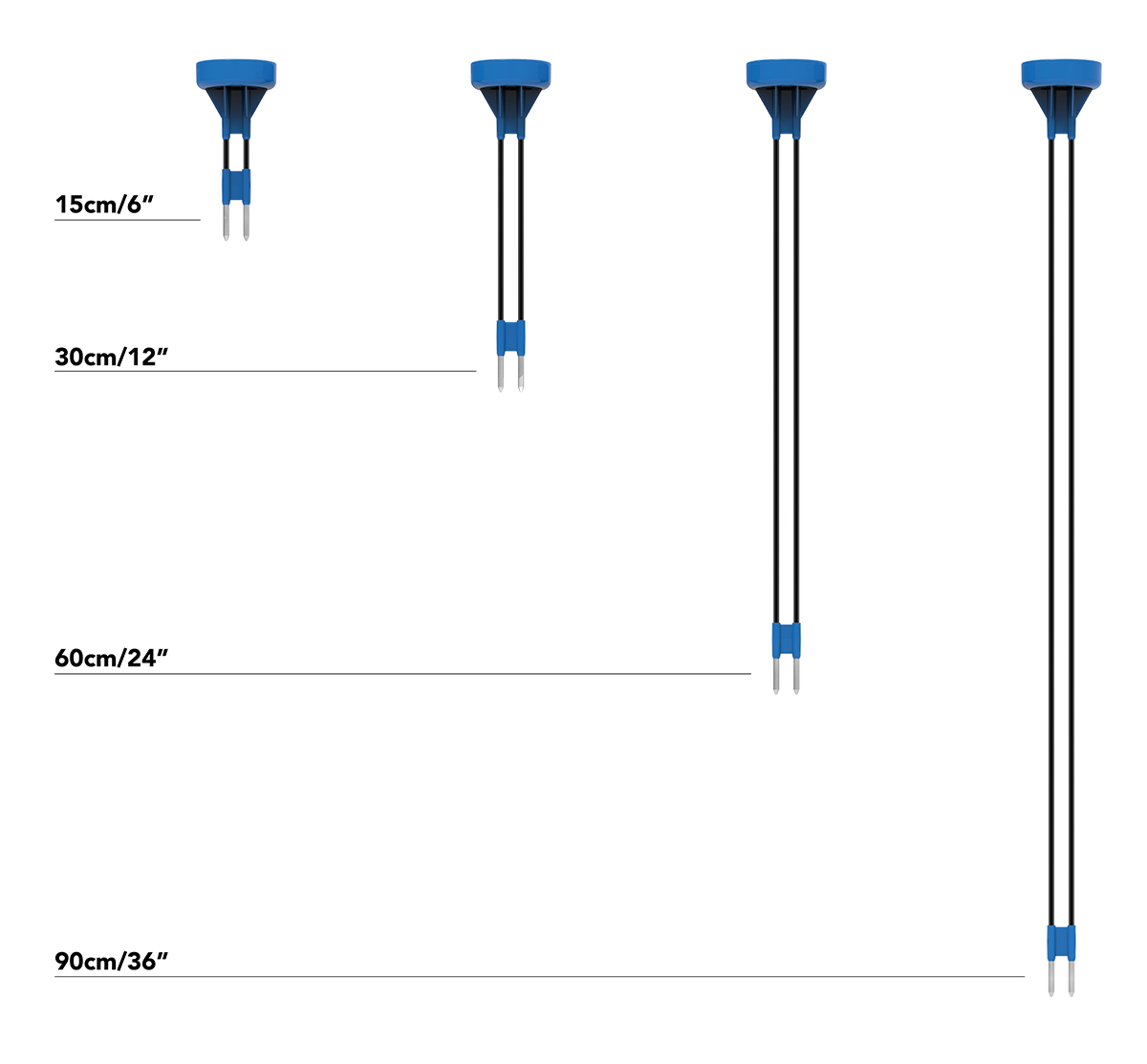
- Active rootzone at multiple depths insights for complex terrain
- Daily Dynamic EC adjustments where needed
- Reliable LoRaWAN connectivity out of the box
The better the data, the better the grower outcomes; and the more trust growers place in their irrigation providers.
Seamless integration with leading automation controllers
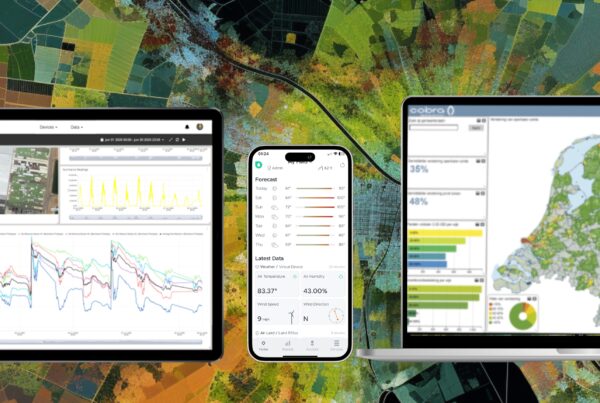
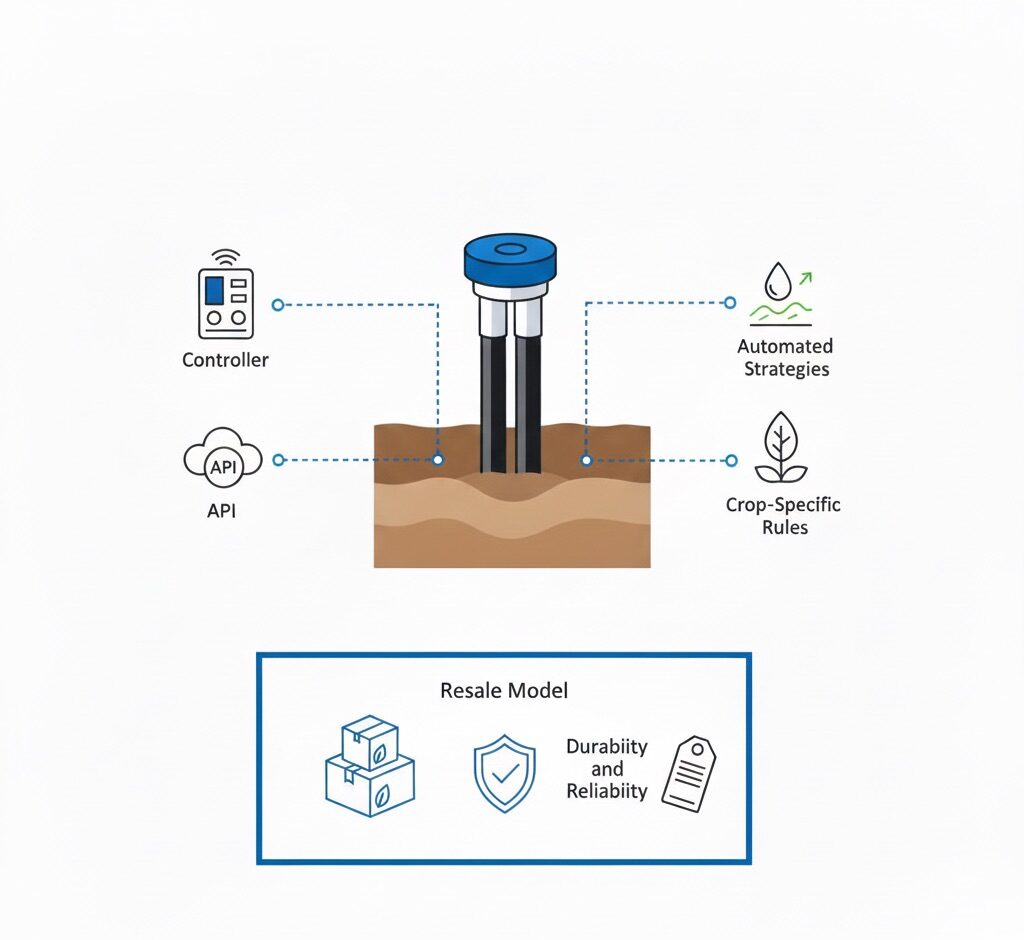
Sensoterra works with leading irrigation platforms and controllers, as well as custom builds with the use of our best-in-class API. The API enables partners to build automated irrigation strategies with moisture thresholds, slope-based control, or crop-specific rules.
Strong resale model
Sensoterra’s simple, scalable design allows partners to sell sensor packages without burdening their teams with ongoing support. The hardware’s durability and maintenance-free performance make it a reliable product that partners can confidently stand behind. We work with you, and are white label ready to support your service portfolio with real-time data.
Backed by global experience
With over 20,000 sensors installed across 40+ countries, Sensoterra is proven in a wide range of soils, climates, and agricultural systems. As demand for precision irrigation grows, partners can rely on a stable solution that continues to scale.
Frequently askes questions (FAQ): Water and Canopy Management
1. How does the application of controlled water stress in vineyards, particularly around véraison, contribute to the development of phenolics in red wine grapes?
Controlled stress limits the size of the berry while concentrating existing compounds. This stress triggers a defense mechanism in the vine, increasing the production of secondary metabolites like anthocyanins (color) and tannins (structure) in the grape skins, which are essential for high-quality red wines.
2. What is the dual function of cover crops in a vineyard row, and how must irrigation be managed when using them?
Cover crops compete with the vines for water, which helps in controlling vigor and inducing stress. They also improve soil structure and prevent erosion. Irrigation must be monitored closely to ensure the vines, and not just the cover crops, are receiving adequate water, especially during peak season.
3. Why is drip irrigation the overwhelmingly preferred method over sprinklers for water application in modern wine grape cultivation?
Drip irrigation delivers water directly to the root zone, maximizing efficiency and minimizing evaporation. Crucially, it keeps the canopy and fruit dry, which is vital for reducing the risk of fungal diseases like downy and powdery mildew.
4. How does the yield goal of a vineyard (high-volume vs. premium low-volume) influence the overall irrigation philosophy?
**High-volume** vineyards irrigate to maintain higher VWC, maximizing berry size and weight. **Premium low-volume** vineyards induce chronic, mild water stress to limit berry size, concentrate flavors, and improve skin-to-juice ratio, resulting in much lower water application rates per ton of fruit.
5. Why is the choice of rootstock in a vineyard a major consideration when developing an irrigation strategy?
Different rootstocks have varying tolerances to drought, salinity, and wet feet. A drought-tolerant rootstock may handle longer periods between irrigation sets than a non-tolerant one. The rootstock essentially determines the vine’s inherent stress threshold.
6. What is the most detrimental period during the vine’s annual cycle for a severe water deficit to occur, and why?
Severe water deficit is most detrimental during the flowering and fruit set stages. Stress at this time can lead to poor fruit set (coulure or shatter) and drastically reduce the potential crop yield for the entire season.
7. What non-moisture metric is commonly used in viticulture to assess canopy density, and how does this relate back to water application?
The Leaf Area Index (LAI) or simply canopy width/height is used. A very dense, large canopy indicates high vigor (often due to too much water/nutrients) and requires higher water demand, whereas a smaller, balanced canopy suggests the vine is under better water control.
8. How does a rocky, gravelly soil typical of some fine wine regions impact the VWC reading compared to a rich loam soil?
Rocky soils hold much less water than loam. Therefore, the same volume of water applied results in a much lower VWC percentage reading, and the VWC drops much faster. This requires shorter, more frequent irrigation sets to prevent rapid stress onset.
9. What is the concept of ‘zoning’ in a modern vineyard, and what are the three main criteria used to establish these zones?
Zoning is dividing the vineyard into management units based on expected uniformity. The main criteria are **Soil Type/Depth**, **Topography** (slope/aspect), and Vigour Mapping (usually derived from aerial imagery like NDVI). Sensors are then placed in the most representative area of each zone.
10. Once the grapes are harvested, what is the primary purpose of applying irrigation water before the vine enters full dormancy?
The primary purpose is to ensure the vine has adequate moisture and is not stressed during the crucial period of carbohydrate accumulation and storage. This stored energy is vital for winter survival and funding the initial flush of growth during the next season’s bud break.
About Sensoterra
Sensoterra takes the lead in wireless soil moisture sensor technology, offering cutting-edge IoT solutions for smart agriculture. Our state-of-the-art moisture sensors are pioneers in the field of soil moisture monitoring. We are committed to revolutionizing precision agriculture, helping farmers optimize their irrigation systems and promote sustainable farming. With Sensoterra, you gain real-time access to critical soil moisture data, empowering you to manage water resources with precision. Established in 2015 and headquartered in Houten, The Netherlands, Sensoterra develops innovative water management solutions for agriculture, horticulture, smart city management, and water governance. Our global network boasts over 12,000 moisture probes in the ground, generating an abundance of data points daily. Jessica Nuboer Marketing & Communications Sensoterra Email: [email protected]