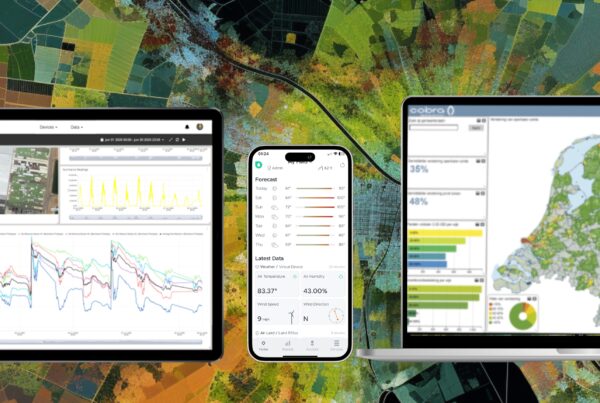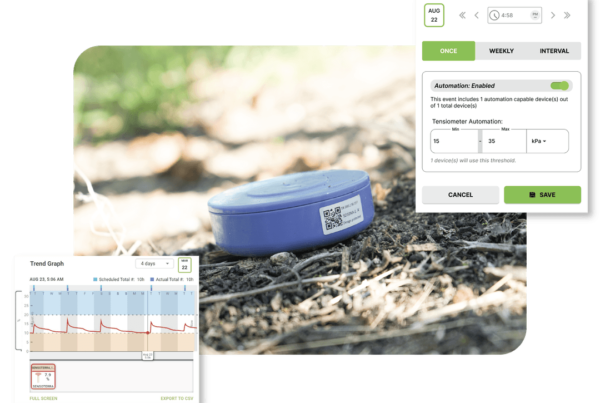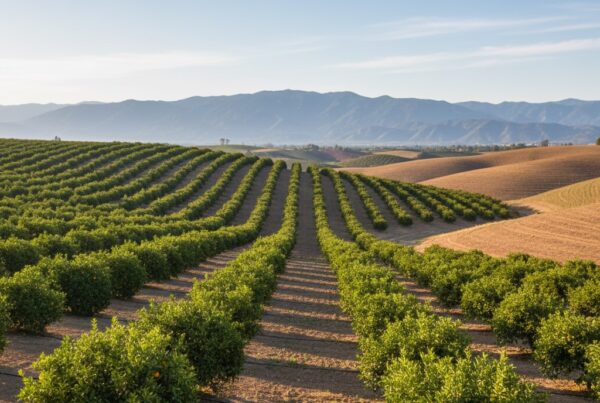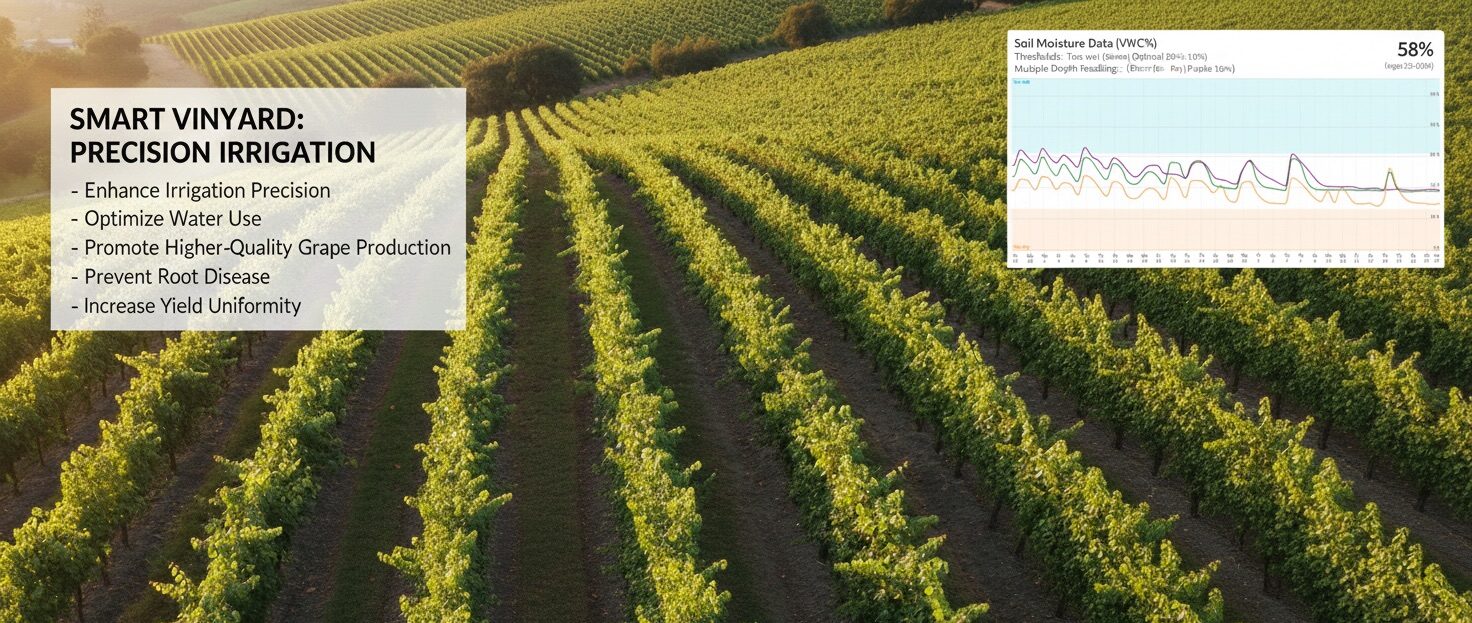
Optimize vineyard irrigation with real-time soil moisture data. Manage slope, aspect, block variability, and micro-terroir with Sensoterra’s calibrated VWC sensors.
Soil moisture sensors for California vineyards
California vineyards thrive on precision. Irrigation timing directly influences fruit composition, flavor development, canopy balance, and overall vineyard quality. But vineyards are rarely uniform; slope, aspect, soil texture, terroir variance, and block structure all affect moisture differences that standard irrigation schedules simply can’t capture.
Soil moisture sensors are becoming essential tools for California winegrowers who want consistency, higher-quality grapes, and a clearer understanding of block-by-block water needs.
Sensoterra’s sensors provide accurate, soil-calibrated VWC readings and connect instantly through LoRaWAN networks across California- giving growers actionable insights without the frustration of complicated infrastructure.
Terrain variability defines vineyard water behavior
In vineyard blocks with slope and aspect changes, gravitational pull and soil structure can create dramatic differences in soil moisture:
Lower-slope vines
- Retain moisture longer
- Can experience higher water tables
- Are at greater risk of overwatering
- Produce fruit with different flavor profiles
Upper-slope vines
- Dry out faster
- Experience more heat exposure
- Often need longer or more frequent irrigation cycles
Mid-slope vines
- Exhibit transitional behavior
- Often receive the “right” amount of water without adjustment
Soil moisture monitoring helps vineyard managers understand these evolving patterns and irrigate each zone according to actual vine need.

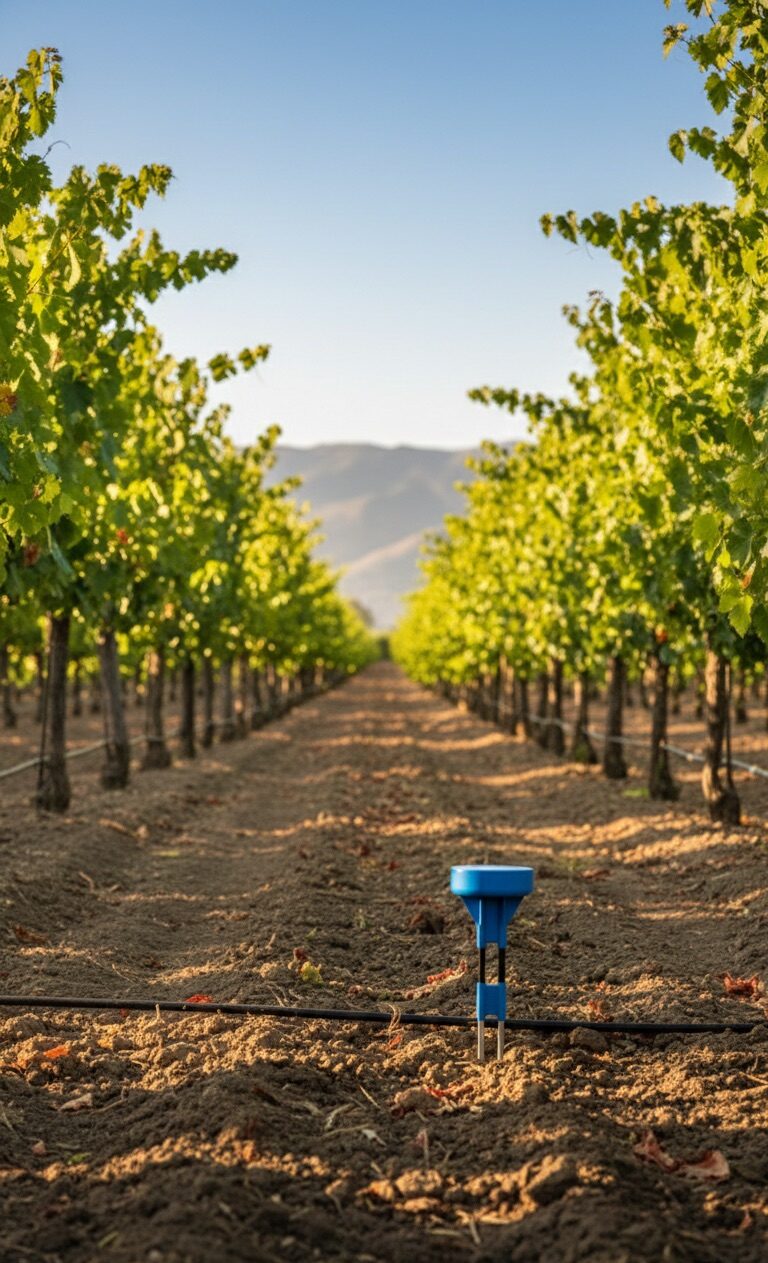
Calibrated VWC for precision viticulture
Sensoterra sensors measure VWC based on your field’s exact soil type. In vineyards where slight moisture differences drive big changes in berry composition, accurate data matters.
With the data, growers can optimize:
- Timing of irrigation sets
- Water application depth
- Block-specific irrigation strategies
- Fruit quality improvement
- Water savings during peak season
Automation for vineyard irrigation
Sensoterra integrates with many irrigation automation platforms, enabling:
- Slope-specific irrigation steering
- Automated irrigation start/stop
- Improved watering intervals based on moisture thresholds
- Better control over pre-harvest water management
This allows vineyard managers to match irrigation more closely to the vine’s actual demand, reinforcing both sustainability goals and wine quality targets.
Reliable connectivity across vineyard landscapes
Thanks to Sensoterra’s LoRaWAN partnerships across California, vineyard sensors connect instantly, even in remote terrain or hilly vineyards, without expensive on-site gateways or lengthy installation or troubleshooting.
Knowing your moisture data will always reach you means you can trust the readings you use to make vineyard decisions.
EQIP eligibility
Many vineyard operations have successfully received EQIP reimbursement for soil moisture monitoring. Sensoterra supports growers through the process.
Frequently asked questions (FAQ): Water and canopy management
1. How does the application of controlled water stress in vineyards, particularly around véraison, contribute to the development of phenolics in red wine grapes?
Controlled stress limits the size of the berry while concentrating existing compounds. This stress triggers a defense mechanism in the vine, increasing the production of secondary metabolites like anthocyanins (color) and tannins (structure) in the grape skins, which are essential for high-quality red wines.
2. What is the dual function of cover crops in a vineyard row, and how must irrigation be managed when using them?
Cover crops compete with the vines for water, which helps in controlling vigor and inducing stress. They also improve soil structure and prevent erosion. Irrigation must be monitored closely to ensure the vines, and not just the cover crops, are receiving adequate water, especially during peak season.
3. Why is drip irrigation the overwhelmingly preferred method over sprinklers for water application in modern wine grape cultivation?
Drip irrigation delivers water directly to the root zone, maximizing efficiency and minimizing evaporation. Crucially, it keeps the canopy and fruit dry, which is vital for reducing the risk of fungal diseases like downy and powdery mildew.
4. How does the yield goal of a vineyard (high-volume vs. premium low-volume) influence the overall irrigation philosophy?
**High-volume** vineyards irrigate to maintain higher VWC, maximizing berry size and weight. **Premium low-volume** vineyards induce chronic, mild water stress to limit berry size, concentrate flavors, and improve skin-to-juice ratio, resulting in much lower water application rates per ton of fruit.
5. Why is the choice of rootstock in a vineyard a major consideration when developing an irrigation strategy?
Different rootstocks have varying tolerances to drought, salinity, and wet feet. A drought-tolerant rootstock may handle longer periods between irrigation sets than a non-tolerant one. The rootstock essentially determines the vine’s inherent stress threshold.
6. What is the most detrimental period during the vine’s annual cycle for a severe water deficit to occur, and why?
Severe water deficit is most detrimental during the flowering and fruit set stages. Stress at this time can lead to poor fruit set (coulure or shatter) and drastically reduce the potential crop yield for the entire season.
7. What non-moisture metric is commonly used in viticulture to assess canopy density, and how does this relate back to water application?
The Leaf Area Index (LAI) or simply canopy width/height is used. A very dense, large canopy indicates high vigor (often due to too much water/nutrients) and requires higher water demand, whereas a smaller, balanced canopy suggests the vine is under better water control.
8. How does a rocky, gravelly soil typical of some fine wine regions impact the VWC reading compared to a rich loam soil?
Rocky soils hold much less water than loam. Therefore, the same volume of water applied results in a much lower VWC percentage reading, and the VWC drops much faster. This requires shorter, more frequent irrigation sets to prevent rapid stress onset.
9. What is the concept of ‘zoning’ in a modern vineyard, and what are the three main criteria used to establish these zones?
Zoning is dividing the vineyard into management units based on expected uniformity. The main criteria are **Soil Type/Depth**, **Topography** (slope/aspect), and Vigour Mapping (usually derived from aerial imagery like NDVI). Sensors are then placed in the most representative area of each zone.
10. Once the grapes are harvested, what is the primary purpose of applying irrigation water before the vine enters full dormancy?
The primary purpose is to ensure the vine has adequate moisture and is not stressed during the crucial period of carbohydrate accumulation and storage. This stored energy is vital for winter survival and funding the initial flush of growth during the next season’s bud break.
About Sensoterra
Sensoterra takes the lead in wireless soil moisture sensor technology, offering cutting-edge IoT solutions for smart agriculture. Our state-of-the-art moisture sensors are pioneers in the field of soil moisture monitoring. We are committed to revolutionizing precision agriculture, helping farmers optimize their irrigation systems and promote sustainable farming. With Sensoterra, you gain real-time access to critical soil moisture data, empowering you to manage water resources with precision. Established in 2015 and headquartered in Houten, The Netherlands, Sensoterra develops innovative water management solutions for agriculture, horticulture, smart city management, and water governance. Our global network boasts over 12,000 moisture probes in the ground, generating an abundance of data points daily. Jessica Nuboer Marketing & Communications Sensoterra Email: [email protected]